


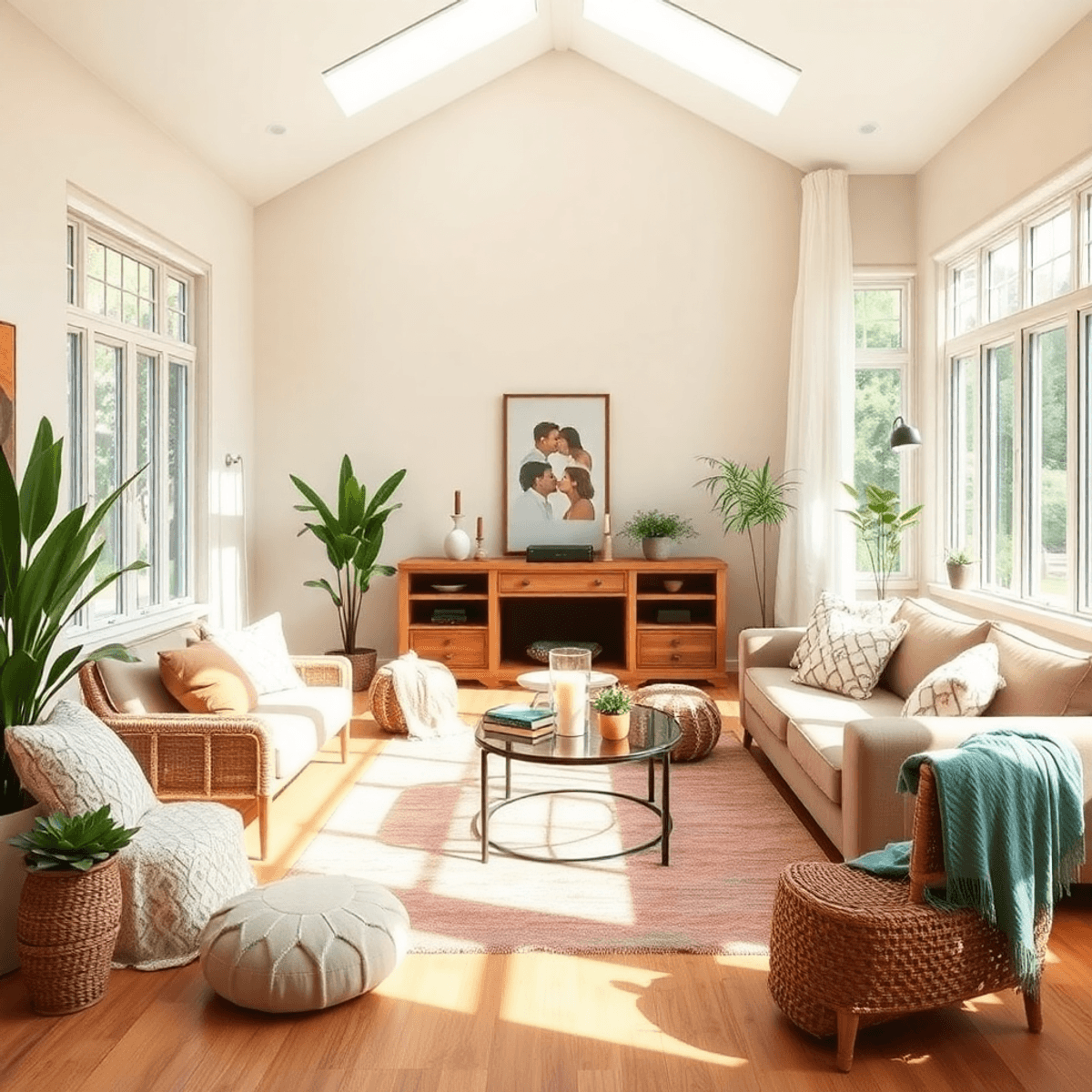
Create a Home & Life You Are Completely Obsessed With
Picture this: You wake up in a space that makes your heart sing. Your surroundings reflect who you truly are, not what Instagram told you to be. You move through your days with purpose, excitement bubbling up naturally because you’ve built a life that actually fits you.
Sound like a fantasy? It’s not.
Here’s the truth—how to create a home and life you are obsessed with isn’t about perfection or having unlimited funds. It’s about intentional living that aligns with what genuinely lights you up inside. When you create a home you love and design a life around your authentic desires, everything shifts. Your energy changes. Your clarity sharpens. That constant background noise of “something’s not quite right” finally quiets down.
I’ve watched so many people transform from feeling overwhelmed by their cluttered spaces and unfulfilling routines into someone who literally can’t wait to come home. The difference? They stopped following someone else’s blueprint and started crafting their own.
This isn’t another article telling you to buy more organizers or hustle harder. We’re diving into actionable strategies that help you build your dream lifestyle from the inside out—starting with getting crystal clear on what you actually want, then creating the roadmap to get there. Ready to fall head over heels with your own life?
Defining Your Unique Vision for Home and Life
Here’s something I learned the hard way: scrolling through Pinterest boards of perfectly styled homes and Instagram reels of “that girl” morning routines left me feeling like I was failing at life. I’d compare my cluttered bedroom to someone’s minimalist sanctuary and wonder why I couldn’t get it together. The truth? I was chasing someone else’s dream instead of defining my own.
Your personal vision isn’t about copying what looks good on social media or meeting some arbitrary standard of what your home “should” look like. It’s about getting crystal clear on what you actually want—not what your mom thinks you need, not what your best friend is doing, and definitely not what some influencer says is trending this season.
Think about it: How can you create a home and life you’re obsessed with if you don’t even know what that looks like for you?
The Life Wheel: Your Starting Point for Clarity
Before you can design your dream life, you need to understand where you’re standing right now. The life wheel assessment is one of my favorite tools for this because it gives you a visual snapshot of your current satisfaction levels across different life areas.
Here’s how it works:
- Draw a circle and divide it into 8-10 sections (like pizza slices)
- Label each section with a key life area: career, health, relationships, home environment, finances, personal growth, fun/recreation, spirituality
- Rate your current satisfaction in each area from 1-10 (1 being completely unsatisfied, 10 being totally fulfilled)
- Connect the dots to see your life wheel
What you’ll notice is that your wheel probably looks more like a bumpy potato than a smooth circle. That’s completely normal! The areas where your ratings dip lowest? Those are your opportunities for transformation.
When I first did this exercise, my home environment scored a depressing 3 out of 10. I was living in constant clutter, couldn’t find my keys half the time, and felt anxious every time I walked through my front door. That low score was my wake-up call.
Avoiding the Comparison Trap
Let me be real with you: comparison is the fastest way to kill your motivation and cloud your vision. Your neighbor’s perfectly organized pantry with matching containers means nothing if you’d rather spend your Sunday hiking than labeling jars. Your coworker’s minimalist aesthetic isn’t wrong, but it’s also not right if you’re someone who finds joy in collections and colorful spaces.
The question isn’t “What does everyone else have?” It’s “What do I need to feel at home in my life?”
Maybe fulfillment for you means having a cozy reading nook where you can escape with a book. Maybe it’s a kitchen that actually functions for your meal prep style. Maybe it’s finally having a bedroom that doesn’t stress you out the second you walk in.
Envisioning Your Ideal State
Close your eyes for a second. Imagine walking into your home six months from now. What do you see? How do you feel? What’s different?
This isn’t about perfection—it’s about alignment. Your vision should reflect:
- Your actual lifestyle (not the one you think you should have)
- Your values (what truly matters to you)
- Your energy (what makes you feel alive and supported)
Write it down. Get specific. “I want a clean home” is too vague. “I want to walk into a bedroom where I can actually see my dresser, find my clothes easily, and feel calm enough to sleep well”
Building an Intentional and Supportive Home Environment
Your home isn’t just four walls and a roof—it’s the physical container for your entire life. Every single item you see when you wake up, every corner you walk past, every surface that catches your eye is either adding to your energy or draining it. That’s not woo-woo talk; that’s neuroscience. Your brain is constantly processing your environment, and when that environment is chaotic, cluttered, or doesn’t reflect who you actually are, it creates a low-level stress that follows you everywhere.
Think about the last time you walked into a space that just felt right. Maybe it was a friend’s cozy reading nook, a boutique hotel room, or even a corner of a coffee shop. You probably felt your shoulders drop, your breathing deepen. That’s what an intentional environment does—it signals to your nervous system that you’re safe, supported, and exactly where you belong.
Designing Spaces That Actually Support You
Creating a personalized space starts with getting brutally honest about how you actually live, not how Instagram tells you to live. If you’re someone who reads in bed every night, that stack of books on your nightstand isn’t clutter—it’s functional. If you never use your formal dining room but always eat at the kitchen counter, stop fighting it. Turn that dining room into something you’ll actually use: a craft space, a home office, a yoga studio.
Home upgrades don’t have to mean renovations or thousands of dollars. Sometimes it’s as simple as:
- Swapping out harsh overhead lighting for warm, layered lamps that make you want to actually be in the room
- Adding a comfortable chair to that corner where sunlight streams in during your morning coffee time
- Installing a hook by the door so your keys finally have a home (because yes, we all know the panic of the missing keys)
- Creating a “landing zone” near your entrance where everything has a designated spot
The goal isn’t magazine-worthy perfection. The goal is creating a home that works with your brain instead of against it.
The Energy Shift of Small Changes
Here’s something I’ve seen time and time again: people think they need to overhaul their entire house to feel different. But the truth? Small, sustainable changes create the biggest shifts. Light a candle when you’re working from home. Put your phone in a drawer during dinner. Designate one surface—just one—that stays completely clear.
These tiny rituals signal to your brain that you’re taking your environment seriously, that you deserve to feel good in your space. They’re acts of self-respect disguised as home decor.
Your physical space and emotional well-being are so intertwined that you literally cannot separate them. When you’re surrounded by piles of unfinished projects, clothes you don’t wear, and surfaces you can’t see, your brain interprets that as unfinished business. It’s exhausting. But when you create zones—a spot for deep work, a corner for unwinding, a surface that’s always clear—you give your mind permission to shift gears.
Want to reduce distractions? Start by making your bedroom a device-free sanctuary. Keep your phone charging in another room. Remove the TV. Add blackout curtains and soft textures. Train your brain that this space is for rest, not scrolling through other people’s highlight reels at 2 AM.
Your home should be the place where you feel most like yourself—not the person you think you should be, but the person you actually are. When your space reflects your real values, supports your actual routines
Taking Action Through Reverse Engineering Your Goals for Each Life Area
You know that feeling when you look at your dream life and think, “How on earth do I get from here to there?” I’ve been there, staring at the gap between my current reality and my vision, feeling completely paralyzed. The secret that changed everything for me? Starting at the finish line and working backward.
Goal setting becomes infinitely more powerful when you flip the script. Instead of asking “What should I do next?” start by painting a vivid picture of what you want your life to look like in each area. What does your ideal home feel like when you walk through the door? How do your relationships make you feel? What does career success actually mean to you—not what Instagram says it should look like?
Grab your journal (or your phone’s notes app, no judgment) and get specific. “I want to be organized” is too vague to work with. “I want to walk into my bedroom and immediately feel calm, with everything having its own designated spot and my surfaces clear” gives you something tangible to work toward.
Here’s where reverse engineering becomes your best friend. Once you’ve defined that end goal, you literally work backward:
- Your ultimate goal: A clutter-free bedroom that feels like a sanctuary
- What needs to be true right before that? All items have designated homes and you maintain them daily
- What comes before that? You’ve sorted through everything and decided what stays
- What’s the step before that? You’ve cleared one surface or drawer to build momentum
- Your actual starting point: Spending 10 minutes today sorting through your nightstand
See how that works? You’ve just created a roadmap from “overwhelmed by bedroom chaos” to “peaceful sanctuary” without the paralysis that comes from staring at the whole mess at once.
The beauty of roadmap creation is that it’s completely adaptable to your life. Maybe you’re working with ADHD and need shorter, more frequent action steps. Perhaps you’re juggling kids and can only tackle things in 15-minute bursts. Your roadmap bends to fit your reality, not some perfect Pinterest version of productivity.
Let’s talk about overcoming obstacles before they derail you (because they will try). When you reverse engineer your goals, you can spot the roadblocks before you hit them. If your goal involves maintaining a tidy kitchen, but you know you struggle with decision fatigue after work, that’s valuable intel. Your roadmap might include meal prepping on Sundays or creating a “drop zone” basket for items that need sorting later.
Common challenges like clutter accumulation or bad habits? They’re just data points for your roadmap. If you keep buying things you don’t need, your action steps might include unsubscribing from marketing emails before you start decluttering. If you’re constantly misplacing your keys, your roadmap includes creating a designated drop spot near the door as step one.
The magic happens when you treat your roadmap as a living document. Life throws curveballs—maybe you get sick, or work gets crazy, or you realize a particular strategy isn’t working for your brain. That’s not failure; that’s feedback. Adjust your steps, try a different approach, and keep moving toward that vision you defined.
Start with just one life area that’s calling to you the loudest. Maybe it’s your physical space, maybe it’s your daily routines, maybe it’s your relationships. Define where you want to be, work backward to create your steps, anticipate your obstacles, and take that first tiny action today.
Cultivating Positive Mindsets for Sustainable Change on Your Journey Towards Creation of Your Ideal Home & Life
Here’s something I’ve learned the hard way: you can have the most detailed roadmap, the prettiest vision board, and all the organizing containers in the world, but if your mindset is stuck in fear and worry mode, you’re going to struggle. Like, really struggle.
I used to wake up every morning and immediately start catastrophizing. “What if I can’t keep up with the cleaning?” “What if I make the wrong decision about this furniture?” “What if I spend money on this and regret it?” Sound familiar? That constant mental chatter wasn’t just exhausting—it was actively blocking me from creating the home and life I desperately wanted.
The Power of a Positive Mindset
A positive mindset isn’t about toxic positivity or pretending everything’s perfect when it’s not. It’s about training your brain to look for possibilities instead of problems. When you walk into your cluttered bedroom, instead of thinking “This is hopeless, I’ll never get this under control,” you can shift to “What’s one small area I could improve today?”
This shift creates resilience. When you inevitably face setbacks (because you will—we all do), a positive mindset helps you bounce back instead of spiraling into shame and giving up entirely. It’s the difference between “I failed at keeping my kitchen organized” and “That system didn’t work for me, so I’ll try something different.”
Worry Reduction: Reclaiming Your Mental Energy
Let’s talk about worry. That sneaky little thief that steals your energy and gives you absolutely nothing in return. Worry reduction isn’t about eliminating all concerns—it’s about redirecting that energy toward growth focus.
Try this: when you catch yourself worrying about whether you’re making the “right” choice for your living room layout, pause. Ask yourself, “Is this worry helping me move forward or keeping me stuck?” Nine times out of ten, it’s keeping you stuck.
Here are some practical techniques that actually work:
- The 5-minute worry window: Give yourself exactly five minutes to worry about something, then move on
- Brain dump journaling: Write down every worry, then beside each one, write one actionable step you could take
- The “so what” exercise: Follow your worry to its logical conclusion—usually, you’ll realize the worst-case scenario isn’t that bad
Training Your Brain for Confident Decision-Making
You know what kills dreams faster than anything? Analysis paralysis. That state where you’re so afraid of making the wrong choice that you make no choice at all. Your home stays cluttered because you can’t decide which organizing system to use. Your walls stay bare because you can’t commit to a paint color.
Confident decision-making comes from embracing uncertainty as part of the process, not something to avoid. Here’s the truth: there’s rarely one “perfect” decision. There are usually several good options, and the best one is the one you actually implement.
Start viewing decisions as experiments rather than permanent commitments. Chose a storage solution that seems promising? Great! If it doesn’t work after a few weeks, you’ve learned something valuable about your needs and habits. That’s not failure—that’s data.
The secret to building this confidence is focusing on continuous personal growth. Every decision
Romanticizing the Journey of Life Creation: Finding Joy in Every Step Towards Building Your Dream Home & Life
Here’s something nobody tells you about creating a home and life you’re obsessed with: the magic isn’t waiting for you at the finish line. It’s happening right now, in this messy, imperfect, gloriously chaotic moment you’re living in.
I used to think I’d be happy once my home was “perfect”—once every drawer was organized, every surface decluttered, every room Instagram-worthy. But you know what? That day never came. And thank goodness it didn’t, because I would have missed out on all the beautiful, hilarious, deeply meaningful moments that happened while I was building toward that vision.
The Art of Finding Excitement in Daily Life
Learning to enjoy the process isn’t about forcing gratitude or toxic positivity. It’s about training your eyes to catch the sparkle in ordinary moments. That morning coffee in your favorite mug? That’s not just caffeine—it’s a tiny celebration. The way afternoon light hits your newly cleared kitchen counter? That’s evidence of your progress, right there in golden rays.
Start noticing your small victories:
- Found your keys on the first try because you finally designated a spot for them? That deserves a little happy dance.
- Walked into your bedroom and felt calm instead of stressed? That’s transformation, friend.
These aren’t insignificant moments—they’re proof that you’re building something real.
Try this: Keep a “joy jar” where you drop in notes about daily wins, no matter how small. “Didn’t lose my phone today.” “Actually used that planner I bought.” “Made the bed and it felt amazing.” When you’re having a tough day, pull one out and remember that progress isn’t always linear, but it’s always there.
Cultivating Creativity in Relationships
Your journey toward your dream life becomes exponentially more fun when you bring the people you love along for the ride. This isn’t about perfection—it’s about connection.
Transform mundane tasks into shared adventures:
- Turn decluttering sessions into “treasure hunts” where you rediscover forgotten items and share the memories attached to them
- Create a “home project date night” complete with takeout, music, and tackling one small organizing goal together
- Start a household game where everyone contributes one idea per week to make your space more joyful
- Institute “appreciation walks” through your home, pointing out improvements and dreaming about future changes
One of my favorite relationship-building practices? The “before and after reveal.” Take photos of a space before you tackle it, work on it together, then celebrate with a little photo shoot of the transformation. It sounds silly, but these shared moments of accomplishment create bonds that go way deeper than the actual organizing.
Viewing Progress as Your Personal Adventure Story
What if you stopped seeing your home transformation as a never-ending to-do list and started viewing it as the most exciting adventure story you’re currently living?
Every challenge becomes a plot twist. Every solution you discover is a skill you’ve leveled up. Every space you transform is a chapter completed. You’re literally the hero of this story, and how cool is that?
Create a visual progress map—whether it’s a journal, a photo album, or even a Pinterest board tracking your journey. Document the chaos alongside the clarity. The “before” photos aren’t shameful—they’re the beginning of your origin story.
Celebrate weird wins:
- Did you finally figure out where to store your reusable grocery bags? Pop some sparkling water and toast yourself.
- Managed to keep your entryway clear for a whole week? That’s worth acknowledging!
Establishing Sustainable Habits for Balance and Energy Management Throughout Your Journey Towards Living Obsessively In Your Dream Home & Life
You know that feeling when you’re running on fumes, pushing through another day of organizing, decluttering, and trying to create this perfect life you’ve been dreaming about? Yeah, that’s your body waving a giant red flag. Creating a home and life you’re obsessed with isn’t about sprinting until you collapse—it’s about developing sustainability habits that actually fuel you instead of draining you dry.
Let me be real with you: I used to think taking breaks was for people who weren’t serious about their goals. I’d power through weekends, skip lunch to organize another closet, and wonder why I felt like a zombie by Wednesday. The truth? That approach is exactly what keeps you stuck in the cycle of starting strong and burning out fast.
The Energy Balance Equation You’ve Been Missing
Think of your energy like a bank account. Every task, decision, and organizing session is a withdrawal. If you’re constantly withdrawing without making deposits, you’re going to overdraft—and trust me, the fees are brutal. They show up as brain fog, irritability, that overwhelming feeling when you look at your to-do list, and yes, even that pile of stuff you keep meaning to sort through but can’t seem to touch.
Sustainability habits aren’t about doing less—they’re about doing things differently. Here’s what actually works:
- Schedule your energy peaks: Notice when you naturally have more focus and tackle your bigger organizing projects then. For me, that’s morning. For you, it might be after dinner. Stop fighting your natural rhythm.
- Batch similar tasks: Group all your donation drop-offs, all your decluttering decisions, all your cleaning tasks. Your brain loves patterns, and switching between different types of activities drains your mental battery faster than you think.
- Set actual timers: Commit to 25-minute focused sessions with 5-minute breaks. You’ll accomplish more in three focused rounds than in two hours of distracted puttering.
Why Vacations Aren’t Optional (Even Mini Ones)
Here’s something nobody tells you about creating your dream life: vacation importance isn’t just about Instagram-worthy beach photos. Regular breaks are literally how your brain processes all the changes you’re making. When you step away from your home environment, you gain perspective you simply cannot access while you’re in it.
I’m not saying you need to book a flight to Bali (though if you can, do it). A vacation can be:
- A full day where you don’t touch a single organizing project
- A weekend staycation where you pretend you’re a tourist in your own city
- An afternoon at a coffee shop with zero productivity goals
- A week completely unplugged from home improvement content
The magic happens when you give your nervous system permission to rest. You’ll return with fresh ideas, renewed energy, and often solutions to problems that felt impossible before you left.
Breaking the Procrastination Loop Without the Guilt
Let’s talk about procrastination avoidance without making you feel like you need to become a productivity robot. Procrastination isn’t laziness—it’s usually your brain trying to protect you from something that feels overwhelming, uncertain, or emotionally charged.
Instead of forcing yourself to “just do it,” try this: break down whatever you’re avoiding into the smallest possible step. Not “organize the garage”—that’s terrifying. Try “spend 5 minutes sorting items in one corner.” Not “declutter the entire kitchen”—try “clear off one counter section.”
Practicing Self-Love And Setting Healthy Boundaries To Support You On The Path To Creating A Home And Life You Are Obsessed With!
Here’s something nobody tells you about creating your dream home and life: it starts with how you treat yourself. I spent years rearranging furniture, buying organizational systems, and trying every productivity hack under the sun. You know what actually changed everything? Learning to love myself unconditionally and saying “no” without guilt.
Self-love practices aren’t just bubble baths and face masks (though those are lovely too). They’re the daily decisions you make that honor your worth. When you’re exhausted but force yourself to deep-clean the entire house because you think you “should,” that’s not self-love. When you recognize your limits and tidy just one surface before resting? That’s radical self-acceptance in action.
Think about it: How can you create a home you’re obsessed with if you’re constantly criticizing yourself for not being “organized enough” or “together enough”? The clutter in your mind creates clutter in your space. I’ve watched this pattern play out countless times—someone beats themselves up for their messy kitchen, which makes them feel worse, which drains their energy, which makes the kitchen messier. It’s a brutal cycle.
Building Your Foundation of Unconditional Self-Acceptance
Start with simple self-discovery exercises that reveal who you truly are beneath the “shoulds” and expectations. Grab your journal and ask yourself:
- What do I actually enjoy about my home, right now, as it is?
- Which organizational methods have I forced myself to use because they’re “popular” but hate in practice?
- What would I do differently if I trusted my own preferences completely?
These questions might feel uncomfortable at first. That discomfort? It’s the gap between who you think you should be and who you actually are. Unconditional self-acceptance means closing that gap by embracing your authentic self—the person who maybe prefers open shelving to hidden storage, or needs visual reminders instead of digital ones.
The Art of Boundary Setting Without Apology
Let’s talk about boundary setting, because this is where the magic happens. Your sister thinks your minimalist approach is “cold.” Your best friend can’t understand why you don’t want surprise visitors anymore. Your partner keeps leaving stuff everywhere despite your requests for shared organization systems.
Setting boundaries doesn’t mean judging their choices or forcing them to live your way. It means protecting your energy and creating space for your vision to flourish. When you focus on your own path without getting tangled in everyone else’s opinions, you free up massive amounts of mental and emotional energy.
Healthy boundaries in your home might look like:
- Designating certain spaces as your personal sanctuary where others respect your organizational systems
- Communicating clear expectations about shared spaces without apologizing for your needs
- Declining social obligations that drain you instead of energize you
- Releasing guilt about not maintaining someone else’s definition of a “perfect” home
I had a client who felt guilty every time she said no to hosting family gatherings. Her home was her safe space, but she kept violating her own boundaries to please others. When she finally started honoring her needs, something beautiful happened: her relationships actually improved. People respected her more because she respected herself.
Creating Peace Through Self-Honoring Choices
Your home becomes a reflection of how much you value yourself. When you practice self-love daily—through small acts like keeping your favorite mug accessible or creating a cozy reading nook just for you—you’re telling yourself “I matter.” When you set boundaries around your time, energy
Integrating Feng Shui And Decluttering Principles For Neurological Ease And Flow In Your Space To Support The Creation Of A Dream Home And Life You Love!
Your home isn’t just four walls and a roof—it’s the container for your energy, your dreams, and your daily life. When that container feels chaotic or heavy, everything else feels harder. I’ve watched countless clients transform not just their spaces but their entire lives by understanding how energy moves through their homes and what happens when we clear the physical and energetic clutter blocking that flow.
Understanding feng shui basics doesn’t require you to become an ancient wisdom expert or rearrange your entire home overnight. At its core, feng shui is about creating harmony between you and your environment. Think of it as the art of arranging your space so energy (or “chi”) can flow freely, supporting rather than draining you. When you walk into a room and immediately feel calm or inspired, that’s good feng shui at work. When you enter a space and feel instantly stressed or stuck, that’s blocked energy screaming for attention.
Simple Feng Shui Principles
Start with these simple principles that make an immediate difference:
- Clear your entryway so energy (and you!) can enter your home freely without obstacles
- Position your bed so you can see the door while lying down, creating a sense of safety and control
- Remove items from under your bed to allow energy to circulate while you sleep
- Add living plants to bring vibrant, growing energy into stagnant corners
- Fix what’s broken because broken items represent broken energy in your life
The magic happens when you pair feng shui with decluttering methods that actually stick. I’m not talking about those marathon decluttering sessions that leave you exhausted and surrounded by piles you don’t know what to do with. Sustainable decluttering respects your energy, your emotions, and your nervous system.
Effective Decluttering Methods
Try the following methods to declutter effectively:
- Use the gratitude release method: before letting go of an item, thank it for serving you. This simple ritual transforms decluttering from a guilt-ridden chore into an act of appreciation. That sweater you never wear? Thank it for keeping you warm when you needed it, then release it to serve someone else. This approach addresses the emotional attachment that keeps so many of us stuck in clutter cycles.
- Create a donation station in your home—a designated basket or box where items can go immediately when you realize they no longer serve you. When it’s full, schedule a donation drop-off. This removes the decision fatigue of “what do I do with this?” that often leads to items sitting in limbo for months.
- For items with resale value, establish a selling system with clear boundaries. Give yourself a timeframe (say, 30 days) to list and sell items. If they don’t sell within that window, donate them. This prevents the “I’ll sell it someday” pile from becoming permanent clutter.
Creating a neurological-friendly environment means designing spaces that work with your brain, not against it. Our brains crave order but get overwhelmed by visual chaos. When everything is visible and competing for attention, your nervous system stays in a low-level state of stress.
Brain-Friendly Strategies
Implement these brain-friendly strategies:
- Use closed storage for items you don’t need to see daily
- Create clear categories so your brain knows exactly where things belong
- Label containers and shelves to eliminate decision fatigue
- Designate “landing zones” for keys, mail, and daily essentials
- Keep surfaces mostly clear to give your eyes (and mind) places to rest
The beauty of combining feng shui and decluttering is how
Staying Motivated with Accountability and Community Support on Your Journey to Creating a Home and Life You Love
Let’s be honest—it’s easy to start off strong. But it’s during that third week, when the initial excitement fades, that things get tough. You’ll find yourself staring at that half-organized closet, questioning why you ever thought you could change your entire life. Trust me, I’ve been there too. The secret sauce separating those who create homes they’re obsessed with from those who keep starting over? They’ve figured out how to stay motivated when things get messy (both literally and figuratively).
The Power of Small Wins
Your brain loves celebrating victories, no matter how small. Instead of setting massive goals like “organize entire house by next month,” break it down into wins you can taste daily. Cleared one drawer? That’s a celebration moment. Found your keys without searching for twenty minutes? Victory dance time. These small, achievable goals create a dopamine hit that keeps you coming back for more.
I keep a “tiny wins” journal where I jot down even the smallest progress—it’s shocking how motivating it becomes to see those pages fill up with proof that you’re actually doing the thing.
Your Accountability Squad Is Everything
Here’s what nobody tells you about transformation: doing it alone is like trying to see your own blind spots. You can’t. You need mirrors in the form of people who genuinely care about your progress.
Find that one friend who gets it—the one who won’t judge your “before” photos but will lovingly call you out when you’re making excuses. Schedule weekly check-ins where you share what you’ve accomplished and what’s tripping you up.
I partnered with my neighbor for accountability, and we text each other photos of our spaces every Sunday. Sometimes it’s beautiful progress shots, sometimes it’s “I found three coffee mugs under my bed and I’m not okay.” Both are valid, and both keep us honest.
Community Support Networks That Actually Work
The magic happens when you realize you’re not the only one who’s ever put cat food in the microwave or lost important documents in the chaos. Joining communities focused on home transformation and intentional living creates this beautiful sense of “me too” that makes the journey feel less isolating.
Look for:
- Online groups specifically for people creating aligned, organized homes
- Local meetups for decluttering enthusiasts or minimalism advocates
- Programs like Aligned Home Alchemy that combine live sessions with ongoing support
- Social media communities where people share real struggles (not just the highlight reel)
These spaces become your inspiration reservoir when your own tank runs dry. Someone else’s breakthrough becomes your possibility. Their struggle reminds you that setbacks are part of the process, not proof that you’re failing.
Self-Assessment Tools That Keep You Honest
Create regular check-in rituals with yourself. Monthly life wheel assessments show you which areas need attention before they become crisis zones. Weekly reflection questions like “What’s working in my space right now?” and “Where am I still feeling stuck?” help you course-correct before you drift too far off track.
I use my phone’s reminder system to prompt these check-ins—because let’s face it, we all need that gentle nudge.
The journey of creating a home and life you’re obsessed with isn’t a solo expedition. It’s a team sport where you’re the captain, but you’ve got cheerleaders, coaches, and fellow players all supporting your success.
Build that team intentionally, and watch how much easier it becomes to stay the course.
Conclusion
You have everything you need to start creating a home and life that makes you truly happy. It’s not about being perfect—it’s about living intentionally in a way that feels genuine to you.
Here’s a quick recap of the action plan we’ve discussed:
- Define your unique vision using tools like the life wheel
- Design your space to reflect who you truly are
- Break down your goals into smaller, manageable steps
- Develop a mindset that focuses on possibilities instead of obstacles
- Find joy in every moment of this beautiful journey
- Create habits that are sustainable and long-lasting
- Seek support and accountability from your community
The magic happens when you consistently take small actions. You don’t have to change everything overnight. Start with one drawer. One corner. One small decision that aligns with your vision.
How can you create a home and life that you absolutely love? You already know the answer—it’s all about taking action, not just dreaming.
Your ongoing passion for life comes from embracing the journey itself. From celebrating the messy parts. From understanding that every little thing you do is contributing to something amazing.
Want to go further? Connect with communities of like-minded individuals who are on the same path as you. Share your successes. Seek assistance when needed. Remember, you’re not meant to do this alone.
Your dream home and life? They’re waiting for you to claim them. Start today.
FAQs (Frequently Asked Questions)
Why is it important to create a home and life that excites and fulfills you?
Creating a home and life that excites and fulfills you is essential because it shapes your personal happiness and overall well-being. Intentional living allows you to design a lifestyle aligned with your authentic desires and values, leading to greater personal fulfillment and joy.
How can I define my unique vision for my home and life without falling into the trap of comparison?
To define your unique vision, focus on your authentic desires and values by utilizing tools like the life wheel assessment to evaluate key areas such as career, health, relationships, and environment. Avoid comparing yourself to societal standards or social media by embracing your individual journey, ensuring your vision truly reflects what brings you joy and satisfaction.
What are some actionable strategies to build an intentional and supportive home environment?
Building an intentional home involves thoughtfully selecting decor and layout that reflect your values and lifestyle. Incorporate personalized upgrades to enhance comfort and functionality, organize clutter to reduce distractions, and create dedicated zones for relaxation and productivity. These steps foster emotional well-being and create a sanctuary that supports mental clarity.
How does reverse engineering help in achieving goals related to creating my dream home and life?
Reverse engineering involves starting with your ultimate goals for each life area and breaking them down into manageable steps. This approach creates an actionable roadmap tailored to your lifestyle, helps identify potential obstacles early on, and enables you to plan strategies for steady progress toward building the home and life you desire.
What mindset shifts are necessary for sustainable change on the journey toward creating an ideal home and life?
Embracing a positive mindset fosters resilience, reduces worry, and attracts opportunities. Focus on growth by training your brain to see possibilities instead of fears or negativity. Cultivate confident decision-making by accepting uncertainty without paralysis by analysis, which supports continuous personal development throughout your journey.
How can I maintain motivation through accountability and community support while building a home and life I love?
Maintain motivation by setting small, achievable goals that keep enthusiasm alive. Establish accountability systems with friends or mentors who track progress and encourage consistency. Engage with community support networks to share experiences, gain inspiration, build belonging, and stay committed on your path toward creating a home and life you are obsessed with.